


Information for HDB Flat Owners
You will receive your 2027 Property Tax bill from Dec 2026. The 2027 Property Tax bill is due by 31 Jan 2027. This page provides the key information about property tax and the available payment options.
On this page:
2027 Property Tax Rebate and Property Tax Payable for Owner-Occupied Residential Properties
The Government will provide a one-off Property Tax (PT) rebate of up to 15%, capped at $100, for all Owner-Occupied (OO) residential properties in 2027. The rebate will be automatically offset against any PT payable.
Table 1: 2027 Property Tax Rebates for Owner-Occupied Residential Properties
| HDB Flat | Private Property |
|---|---|
| 15% | 10% capped at $100 |
Extended GIRO Scheme for Residential Property (Retirees)
You can apply for an extended instalment plan of up to 24 months for the payment of the property tax for your residential property if you meet the eligibility criteria for the scheme. With effect from 1 Jan 2026, the eligibility criteria are:
- You live in the property (i.e. your property is taxed at the owner-occupier tax rates); and
- Your assessable income must not exceed $39,000 (based on your latest income tax assessment available); and
- All property owner(s), are aged 65 or above; and
- You have outstanding property tax to pay for the property.
Refer to Experiencing difficulties in paying your tax? for the steps on how to apply for an extended instalment plan. You will be required to declare that you meet the above criteria in your application.
Please note that your extended instalment plan will be reverted to the standard instalment plan of up to Dec 2027 if you are subsequently found to not have met the above criteria.
Understanding Property Tax
Property tax is a tax on ownership of property. It is an annual tax which is payable regardless whether you rent it out, live in it, or leave it vacant.

Our Taxes. Our Nation.
Property tax payments fund public services like education, healthcare, and parks for everyone to enjoy.
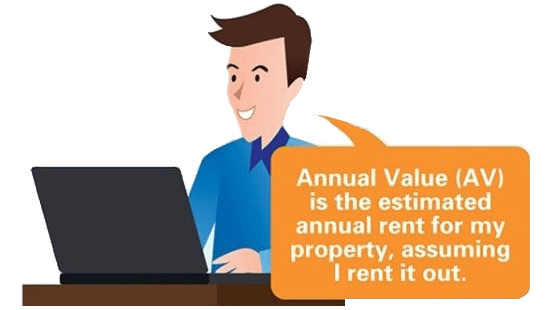
Annual Value (AV)
AV is based on estimated market rentals of properties that are similar to yours. You can compare it with rentals on the HDB and URA websites. IRAS analyses rents of similar properties that have been rented out and adjusts for differences in location, size, condition, and other physical attributes.
AV may be higher or lower than your actual rent as the AV reflects market rent at the time when IRAS reviews it, while your actual rent may have been contracted at an earlier date.
Finding Annual Value Information
If you own the property: You can check the current AV by using the 'View Property Summary' digital service for free. All AVs shown are as at current date. If there is any change to the AV stated in your 2027 Property Tax bill, it will only be reflected on the digital service from the effective date of change.
If you do not own the property: You can use the 'Check Annual Value of Property' digital service to search the AV of a property for $2.50 per search. This digital service maintains AV information for the current year and up to 5 back years. This digital service only provides information on AV and other information on the property is not made available.
Property Tax Rates
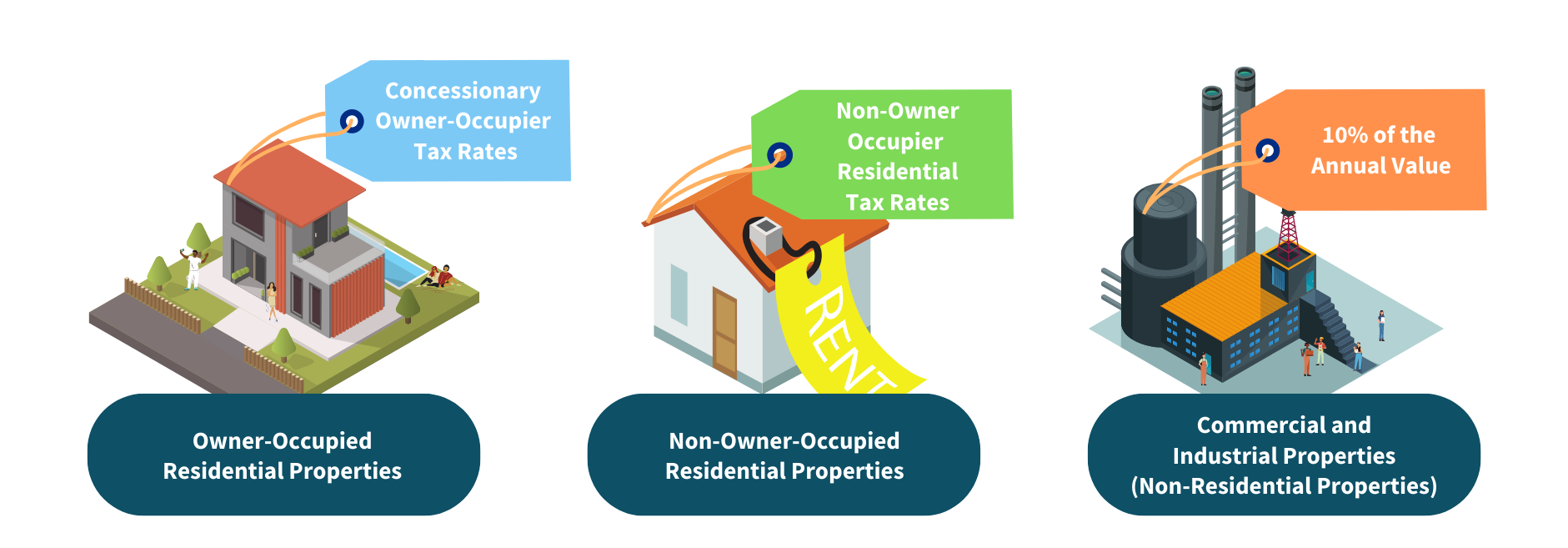
How property tax is calculated: Property Tax = Annual Value x Tax Rates
Property tax rates on owner-occupied and non-owner-occupied residential properties are applied on a progressive scale. All other properties are taxed at 10% of the Annual Value.
Owner-occupier tax rates
Owner-occupier tax rates apply to only 1 property you own and live in. The other residential properties that you own will be taxed at the non-owner-occupier rates, even if you live in them as second homes.
For married couples: You can only apply for the owner-occupier tax rates to 1 home, whether owned jointly or separately.
Applying for owner-occupier tax rates
If you are residing in your property but it is currently taxed at "non-owner-occupier residential tax rates", you can apply for the owner-occupier tax rates via our 'Apply/ Withdraw Owner-Occupier Tax Rates' digital service. You can view the status of your application thereafter in the same digital service.
For more information, please refer to Lower Property Tax Rates for Owner-Occupied Residential Properties.
Please note that any outstanding property tax must continue to be paid in full, regardless of whether an application has been submitted or is pending an outcome. Submission of an application does not suspend or defer your tax payment obligations. You can view the status of your application in the same digital service and will be informed of the outcome, including any changes to the tax position of the property.
Property Tax Payment
2027 Property tax bill payment deadline: 31 Jan 2027.
IRAS will send customised SMS reminders with your property address, tax amount to be paid and property tax reference number. Final reminders will be sent in the last week of January.
Check property tax balance

Use the IRAS bot (bottom right of this webpage) or the 'Check Property Tax Balance' digital service to check your property tax balance.
GIRO payments
Set up GIRO to enjoy one-time deduction or up to 12 interest-free monthly instalments.
For Individuals:
- myTax Portal (for DBS/POSB ,OCBC, UOB, Bank of China, Citibank, HSBC and Maybank customers)
- Internet Banking (for POSB/DBS/ OCBC/ UOB customers)
- AXS stations (for DBS/POSB customers)
For Businesses:
- myTax Portal (for DBS/POSB, OCBC, UOB, Maybank and Bank of China customers)
If you had a previous GIRO arrangement with IRAS before, you can re-activate it at myTax Portal under "Apply/Manage GIRO Plan".
Digital payments using your property tax reference number
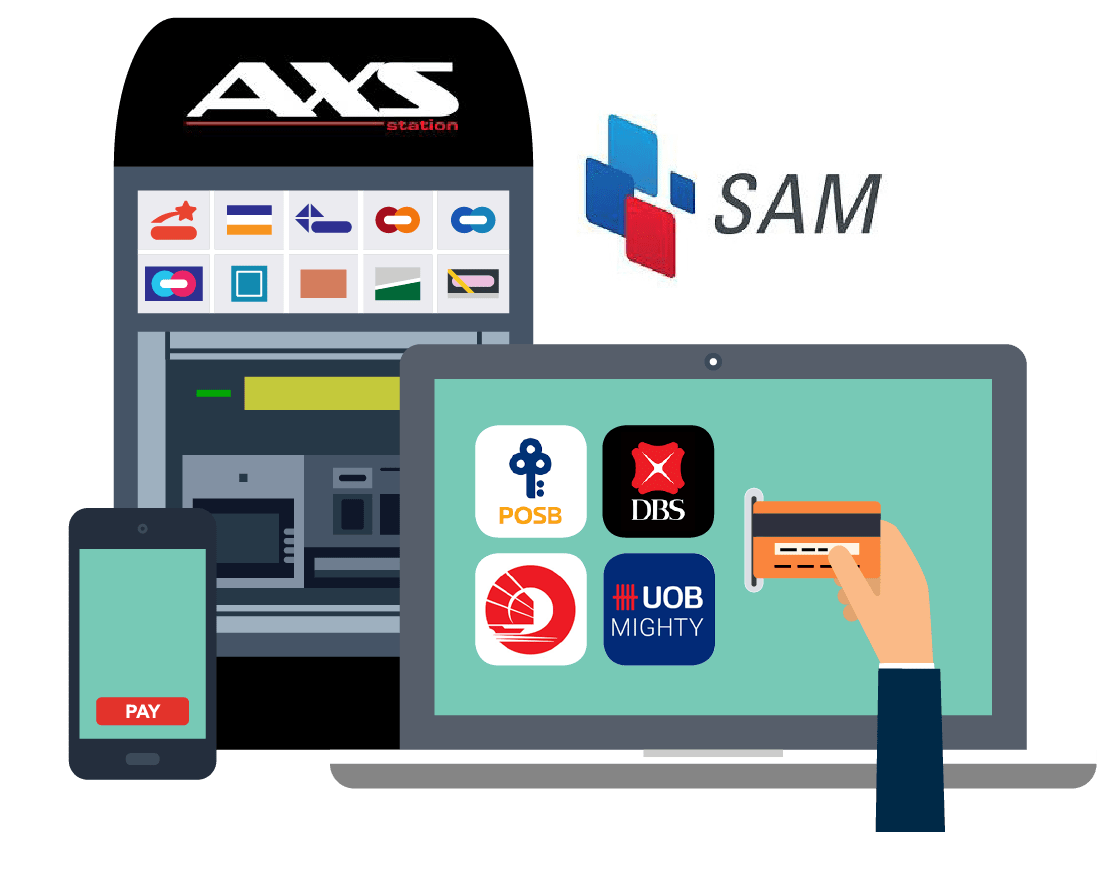
- PayNow QR and AXS via myTax Portal: Payment will be updated to your tax account immediately
- Internet Banking: Payment will be updated within 3 working days
- Other modes of payment
Electronic Property Tax (e-PT) Bills
Enjoy convenience and go green by choosing e-PT bills. You will be notified via SMS and/ or email when your e-PT Bill is ready. You may view your bill via our 'View Property Tax Notices' digital service.
Benefits of e-PT Bills

Access your e-PT Bills with Singpass, no more lost mails.

View the current and up to past 4 years (based on the notice date) of e-PT Bills anytime, anywhere.

Receive SMS and/ or email notifications on how much to pay and by when.
Improved property tax digital billing experience

For multiple property owners, if you have opted for consolidated electronic property tax bills, you will get a single notification when all your digital bills are ready for viewing at mytax.iras.gov.sg.
The improved property summary in myTaxPortal (Singpass login required) presents an overview of the property tax position for all your properties and provides the option for you to print a consolidated summary statement.
Corporate owners can download essential property tax information for your company's needs.
Interactive property tax bill (i-Bill)
You can access your Interactive property tax bill (i-Bill) through myTax Portal Landing Page under Tax Matters at a Glance and pay your property tax bills on your mobile phones or laptops through i-Bill.
Common Situations for Property Owners
Situation 1: The tenancy for my property has ended. What do I need to do?
If you move back into your property after the tenancy ends, you will need to apply for the owner-occupier tax rates, as these rates are NOT applied automatically when a tenancy ends. You can apply using the 'Apply/ Withdraw Owner-Occupier Tax Rates' digital service.
This also applies if the tenancy is terminated early. Please submit your application via the 'Apply/ Withdraw Owner-Occupier Tax Rates' digital service along with supporting documents showing that the tenancy has been terminated.
If you do not move back into the property and it remains vacant, non-owner-occupier residential tax rates will continue to apply. For more information, you can refer to Renting out my property.
Situation 2: The owner-occupier tax rates are currently applied to my property in Jurong. My spouse has bought a new property in Pasir Ris. Can we apply the owner-occupier tax rates to the Pasir Ris property instead?
Yes. If you and your spouse decide to live in your spouse’s newly purchased property in Pasir Ris, your spouse may apply for the owner-occupier tax rates.
Before applying, you will need to withdraw the owner-occupier tax rates from your existing property in Jurong using the 'Apply/ Withdraw Owner-Occupier Tax Rates' digital service.
Once the owner-occupier tax rates have been withdrawn from your property in Jurong, your spouse may apply for the owner-occupier tax rates for her new property in Pasir Ris using the 'Apply/ Withdraw Owner-Occupier Tax Rates' digital service. For more information, you can refer to Lower Property Tax Rates for Owner-Occupied Residential Properties.
Situation 3: My family member who owns a property has passed away, what do I need to do?
We understand that the passing of a loved one is a difficult time. IRAS is committed to supporting you in fulfilling the deceased’s tax obligations, as quickly and seamlessly as possible.
As a concession, IRAS will continue to apply the owner-occupier tax rates (OOTR) for up to 2 years from the owner’s passing or the date of transfer of the property, whichever is earlier, to allow some time for the property transfer arrangements to be carried out. The tax rates will be adjusted to the higher non-owner-occupier tax rates if the property remains to be held by the estate of the deceased person after the 2-year extension or if the property is wholly tenanted during the 2 years concession period.
During this time, the Legal personal representative should complete the legal transfer of the property to the beneficiaries as soon as possible. Owner-occupier tax rates may then apply, depending on the new ownership structure.
If the property was rented out prior to the owner's passing, the concession does not apply after death, and the property will continue to be taxed at the non-owner-occupier residential tax rates. Please arrange to have the property legally transferred to the beneficiaries. IRAS will review the owner-occupier tax rates based on the new owner's eligibility.
If the property is legally constrained from being transferred to the beneficiaries (e.g. the beneficiary is below the legal age to transfer the property), you can submit an appeal via ' myTax Mail' digital service on myTax Portal with this template (PDF, 42KB) for the owner-occupier tax rates to continue to apply to the property. Beneficiaries must be residing in the property and not be enjoying owner-occupier tax rates on another property to qualify for the concession.
Property Tax Digital Services
You can access digital services at myTax Portal to:
- Manage your preference for electronic or paper notices
- View your account summary (tax account details, payment plan schedule, statement of account, etc.)
- View your property summary (annual value, tax rate, etc.)
- View a copy of your notices/bills and correspondence
- Apply or withdraw owner-occupier tax rates
Find out more information on our digital services.
Useful links
- Property Tax Rebate for All Owner-Occupied Residential Properties in 2027
- Property Tax Calculator
- Check if you are eligible for Owner-Occupier Tax Rates
FAQs
You can contact IRAS to unsubscribe from receiving electronic notices.